
Cancer Should Not Have a Tribe
In Zimbabwe, cancer does not discriminate by tribe, language, or region. But tragically, access to diagnosis and treatment increasingly appears to do exactly that.
By Malvin Malayitha — MRP Information Desk, Political Health Correspondent
Structural Marginalisation in Healthcare.
For years, communities in Mthwakazi—particularly Bulawayo, Matabeleland North, and Matabeleland South—have raised concerns about structural marginalisation in healthcare. The issue is not merely about hospital shortages or a weak economy. It is about who gets access, who gets delayed, and who gets priced out of life-saving care.
At the centre of this crisis lies one critical medical gateway: the biopsy.
Before most cancers can be treated surgically or with chemotherapy, doctors must confirm the diagnosis through tissue sampling—commonly via Tru-Cut (core needle) biopsy or surgical biopsy. Without biopsy, there is no definitive diagnosis. Without diagnosis, there is no timely treatment.
In other words: No biopsy = no cancer confirmation = delayed or absent treatment. This is where inequality becomes deadly.
On 21 June 2026, an ENT patient in Zimbabwe with a suspected cancerous lesion requiring biopsy was reportedly charged US$150 for biopsy-related procedures before tissue diagnosis could proceed. For wealthy families, this may be inconvenient but manageable.
For many ordinary citizens in Mthwakazi—especially unemployed, rural, pension-dependent, or low-income households—US$150 is catastrophic expenditure.
For some families, that amount equals:
– several months of food
– school fees for children
– transport for multiple hospital visits
– or half a year of disposable cash
When a patient must first “find money” before confirming cancer, diagnosis becomes delayed by poverty. And cancer does not wait.
The Hidden Cost of Diagnosis
Our health economics review estimates that the true public-sector cost of a biopsy in Southern Africa averages US$200–300, though in efficient systems the patient may pay little or nothing because of subsidies. In Zimbabwe, however, the burden on patients is far heavier.
Although public hospitals officially offer subsidised procedures, patients often face:
– consultation costs
– imaging costs
– pathology costs
– transport costs
– informal referral costs
– private specialist charges
For many families, one biopsy can consume several months of income.
A poor household in rural Matabeleland may survive on US$400–900 annual per capita income, whereas average incomes in Harare and parts of Mashonaland are significantly higher, around US$1,200–2,500.
This means the same US$250 biopsy represents vastly different economic burdens:
Region
Poor Mthwakazi household
Mashonaland average
Average SADC region
Biopsy Cost as % of Annual Income
30–45%
10–18%
9–15%
A poor patient in Mthwakazi carries a biopsy burden roughly 2.6 times higher than a patient in Mashonaland, and more than 3 times higher than the average SADC resident.
This means: That is not just inequality. That is diagnostic exclusion. There are Numbers Behind the Crisis.
Zimbabwe’s population is about 15.2 million, with an estimated 25,000 new cancer cases annually. Roughly 85% require biopsy before definitive treatment, translating to about 21,000–22,000 biopsies needed each year.
But because of cost, infrastructure shortages, and delayed referrals, we estimate only:
– 12,000–16,000 biopsies are actually completed annually.
– That leaves thousands of suspected cancer patients in diagnostic limbo.
– Zimbabwe already performs below regional expectations.
Compared with SADC peers, Zimbabwe’s effective biopsy access is only around:
– 76% of average SADC capacity (about 24% below regional expectation)
– Mthwakazi: Population 15%, But Biopsy Access Far Less
– Mthwakazi (Bulawayo + Matabeleland North + South) holds approximately 2.25 million people, about 15% of Zimbabwe’s population.
Based on population alone, Mthwakazi should account for approximately: 3,200 annual pre-surgical biopsies.
Yet evidence suggests the region likely receives only: 8–11% of completed national biopsies.
This implies a serious under-access gap. For every 100 comparable cancer patients in Mashonaland receiving diagnostic biopsy, only around: 39–55 patients in Mthwakazi may receive equivalent access.
This means many cancer patients in Matabeleland are diagnosed late—often when disease has already advanced to Stage III or IV.
The Human Question: Who Controls Referral Pathways?
A deeply uncomfortable concern repeatedly raised by communities is the structure of medical power in Zimbabwe.
There is a widespread perception that:
– senior specialists are disproportionately concentrated in Harare
– junior doctors function as referral gatekeepers
– public systems increasingly feed private practice
Concerns have also been raised that some patients are redirected from public facilities to private specialist rooms for procedures that could theoretically be done within public institutions—at dramatically higher cost.
If true, this creates a dangerous system where:
1. Poor patients wait longer
2. Delays worsen disease progression
3. Those with money bypass queues
4. Those without money deteriorate or die
This is especially devastating in Mthwakazi, where household purchasing power is lower.
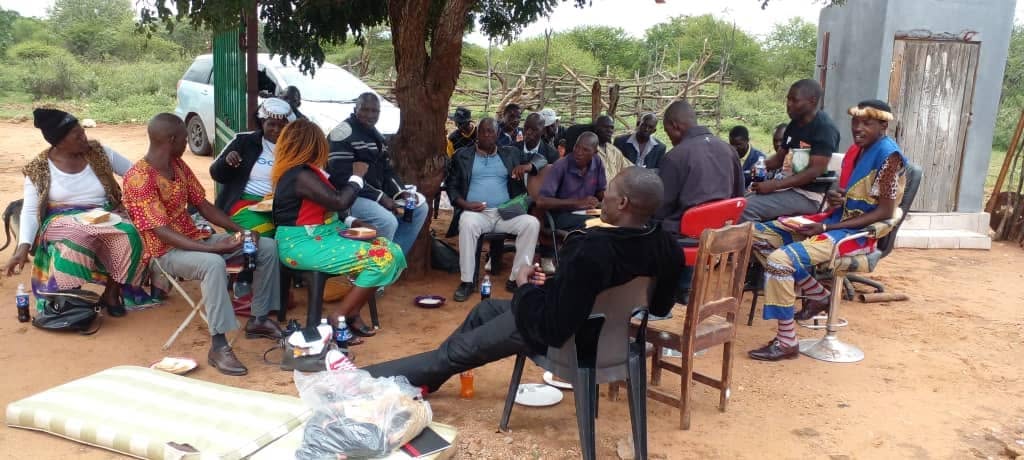
Let us be clear: This article is not an attack on Shona-speaking doctors as individuals. Many are ethical professionals serving under difficult conditions.
The problem is systemic concentration of power, not ethnicity alone. But ethnicity becomes relevant when systemic inequity maps strongly onto regional and linguistic lines.
When 80–90% of doctors graduating into the system come from one dominant linguistic bloc, while historically marginalised regions remain underrepresented in specialist training and leadership, inequities can become structurally reinforced—even without explicit tribal intent.
That is how structural bias works. Not always through spoken discrimination.
Often through:
– who gets trained
– who gets promoted
– who controls referrals
– who controls specialist access
– where machines are installed
– where pathology labs are located
When Cancer Meets Poverty and Marginalisation
Cancer is ruthless against delay.
A six-month delay in diagnosis can turn:
– curable breast cancer into metastatic disease
– localised prostate cancer into bone metastases
– operable colorectal cancer into terminal illness
Every referral barrier matters.
Every additional fee matters.
Every delayed biopsy matters.
And when those barriers disproportionately affect one region, one language group, and one economically disadvantaged population, the issue stops being merely medical.
It becomes political.
It becomes a justice issue.
It becomes a human rights issue.
The MRP Position
From the Mthwakazi Republic Party Information Desk, we assert:
Healthcare access must never depend on:
– tribe
– language
– political geography
– economic privilege
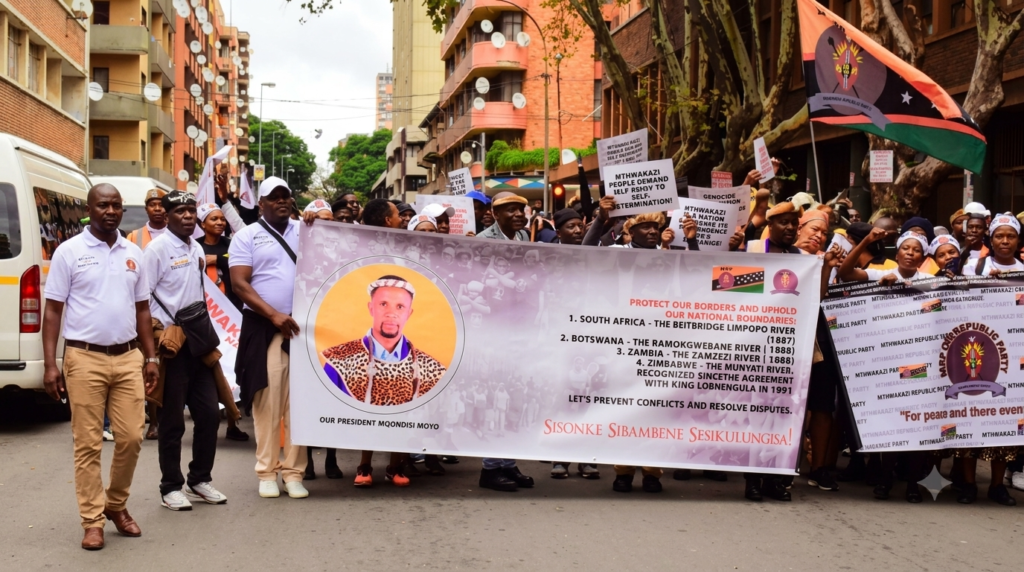
MRP calls for:
1. Decentralised Cancer Diagnostics
Biopsy and pathology services must be expanded in:
– Bulawayo
– Gwanda
– Lupane
– Hwange
– Plumtree
2. Independent Audit of Referral Pathways
Zimbabwe must investigate whether public patients are being inappropriately redirected into private specialist pipelines.
3. Regional Equity in Specialist Training
Matabeleland must receive proportional training slots in:
– oncology
– surgery
– pathology
-radiology
Cancer Equity Commission
An independent body should publish provincial data on:
– biopsy access
– waiting times
– mortality
– diagnostic delay
Final Word
Final Cancer should not ask: “Are you Shona or Ndebele?”
Cancer should not ask: “Can you pay private fees?”
Cancer should not ask: “Do you come from shona ethnicity?”
Yet in Zimbabwe today, too many patients feel those questions are silently being asked by the system. And that should trouble every conscience. Because when a mother in Tsholotsho dies waiting for a biopsy she cannot afford, while another patient with connections gets fast-tracked through private channels, we are no longer discussing healthcare.
We are discussing whose life is valued more. That is the real diagnosis.And Zimbabwe must confront it.
— Malvin Malayitha
MRP Information Desk
Political Health Correspondent
Leave a Reply